
Local Hospice History
An Oral History of End-of-Life Care in Connecticut's Northwest CornerVoices of Hospice
On March 29, 2026, two pioneering nurses sat down with journalist Kristin Ewald, to share what they had witnessed across six decades of care. Louisa LaFontan and Donna DiMartino helped shape hospice care in Connecticut’s Northwest Corner — from the early days of Sharon Hospital’s first intensive care unit to the movement that would transform how Americans die. Press play to hear their story in their own words.
▶ Listen · 30 minutes
Louisa LaFontan & Donna DiMartino with Kristin Ewald · March 29, 2026

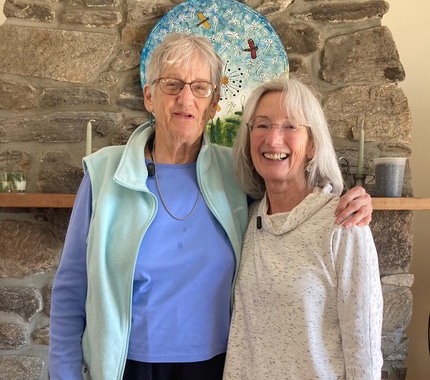
Photo: Courtesy of Kristin Ewald
Photo: Courtesy of Kristin Ewald
Two pioneers, one story
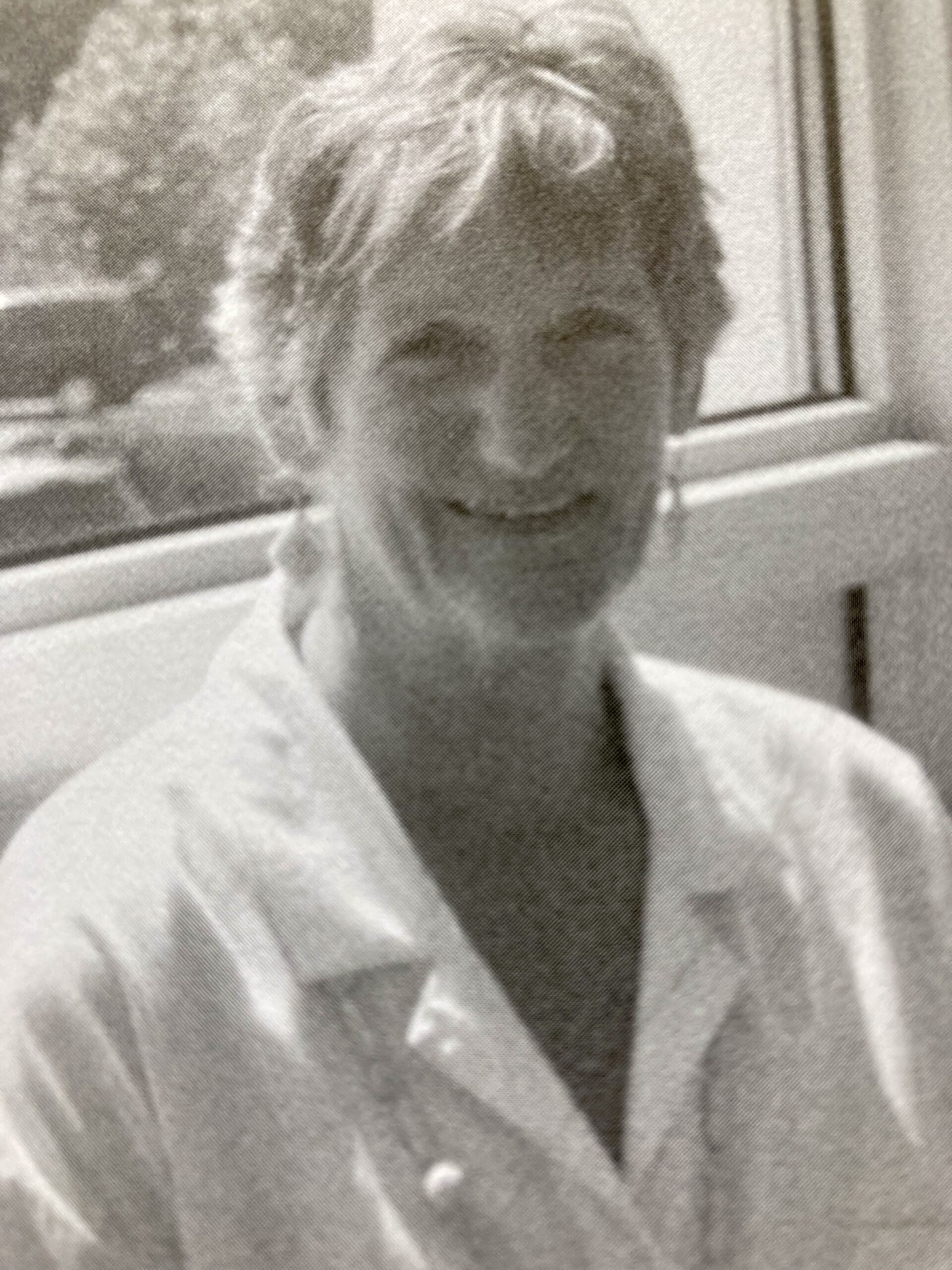
Louisa LaFontan, RN, Sharon Hospital. She founded the hospital’s first intensive care unit in 1965 and went on to lead its pioneering hospice program.
Photo: Courtesy of Louisa LaFontan
A nurse who changed things
A nurse who changed things
Louisa LaFontan, RN, Sharon Hospital. She founded the hospital’s first intensive care unit in 1965 and went on to lead its pioneering hospice program.
Photo: Courtesy of Louisa LaFontan

Growing up in the 1960’s Donna (with her son, Stephen in 1974) says she just wanted to be “foot-loose and fancy free.” Her parents felt otherwise, so off she went to earn a degree from the Hartford Hospital School of Nursing. Today, she says, “It was one of the best decisions I ever made.”
Photo: Courtesy of Donna DiMartino
Focus on saving lives
“When hospice was first introduced, the idea that you wouldn’t treat a dying patient aggressively was foreign to a lot of people. But over time, we recognized that by giving the patient a chance to talk and focus on what they wanted, we learned that sometimes people didn’t want to be cured. They just wanted to be cared for.”
Growing up in the 1960’s Donna (with her son, Stephen in 1974) says she just wanted to be “foot-loose and fancy free.” Her parents felt otherwise, so off she went to earn a degree from the Hartford Hospital School of Nursing. Today, she says, “It was one of the best decisions I ever made.”
Photo: Courtesy of Donna DiMartino
Focus on saving lives
“When hospice was first introduced, the idea that you wouldn’t treat a dying patient aggressively was foreign to a lot of people. But over time, we recognized that by giving the patient a chance to talk and focus on what they wanted, we learned that sometimes people didn’t want to be cured. They just wanted to be cared for.”
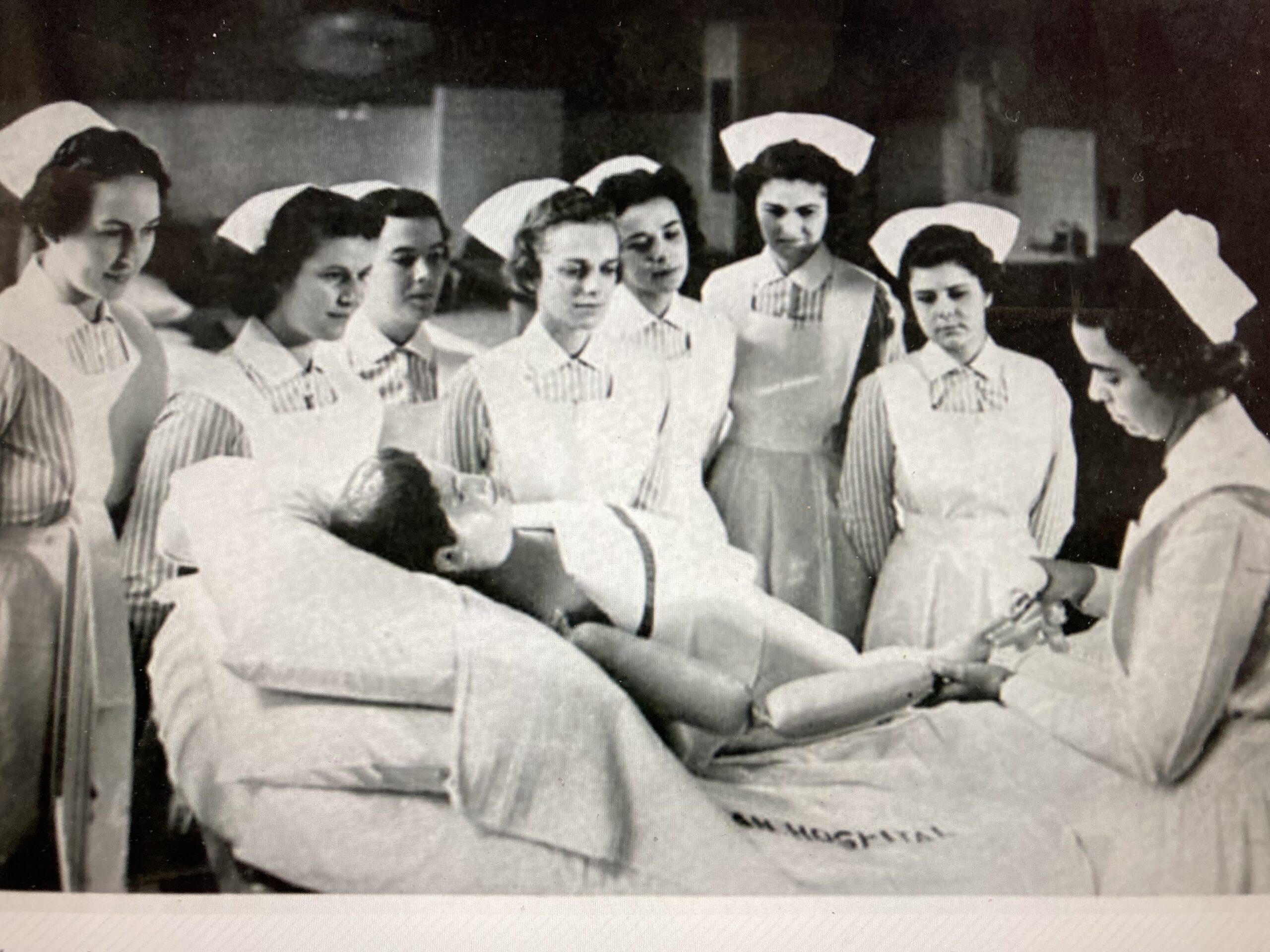
Photo: Columbia University Health Sciences Library
The hospital culture of the era
When Louisa and Donna began their careers, nurses were expected to defer entirely to physicians. Donna recalls being pinned against a wall by a doctor demanding to know why temperature readings were not in the log. Louisa was sent back to change out of her blue-striped Columbia-Presbyterian uniform by a physician who called it ‘inappropriate.’ The culture was strict — but it was changing.
The hospital culture of the era
Nursing education in mid-century America. When Louisa and Donna trained, nurses were expected to defer entirely to physicians — a culture both women helped change.
Photo: Columbia University Health Sciences Library
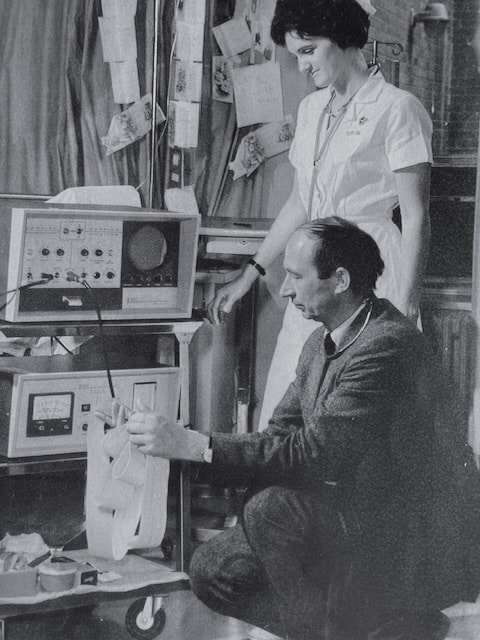
Louisa LaFontan with Dr. Carl Bornemann at Sharon Hospital. Dr. Bornemann taught Louisa the EKG expertise she would pass on to a generation of ICU nurses.
Photo: Courtesy of the Sharon Historical Society
Learning to read the heart
Louisa LaFontan with Dr. Carl Bornemann at Sharon Hospital. Dr. Bornemann taught Louisa the EKG expertise she would pass on to a generation of ICU nurses.
Photo: Courtesy of the Sharon Historical Society
Learning to read the heart
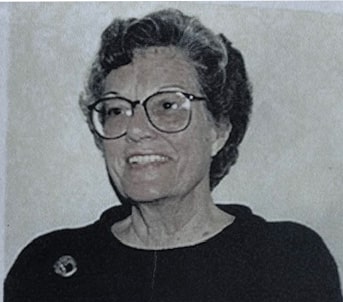
Photo: Courtesy of the Sharon Historical Society
A mothers determination
She formed the first hospice steering committee in the Northwest Corner, inviting Louisa to join. Louisa had recently attended a lecture by Florence Wald — Dean of the Yale School of Nursing and the mother of the American hospice movement — and returned inspired.
A mothers determination
She formed the first hospice steering committee in the Northwest Corner, inviting Louisa to join. Louisa had recently attended a lecture by Florence Wald — Dean of the Yale School of Nursing and the mother of the American hospice movement — and returned inspired.
Claudia Haines Warner (1924–2006), Sharon, CT. Her determination to relieve her son’s suffering set the hospice movement in motion across the Northwest Corner.
Photo: Courtesy of the Sharon Historical Society
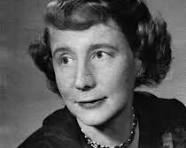
Florence Wald (1917-2008), Dean of the Yale School of Nursing and founder of the American hospice movement. In 1974, she established the first free-standing hospice in the United States, in Branford, Connecticut.
Photo: MiraSol Health
A new way of caring
Florence Wald was Dean of the Yale School of Nursing when she grew increasingly frustrated with the way dying patients were being cared for. She took a leave from Yale to train in London with Dame Cicely Saunders, who in 1967, had founded the world’s first modern hospice. Inspired by what she witnessed, Wald returned to Connecticut, pushed for changes to Yale’s nursing curriculum, and began speaking out about the need for compassionate end-of-life care — efforts that culminated in the establishment of Connecticut’s first hospice.
Her lectures changed the direction of Louisa’s work, and by extension, the care available to dying patients across the Northwest Corner.
Florence Wald (1917-2008), Dean of the Yale School of Nursing and founder of the American hospice movement. In 1974, she established the first free-standing hospice in the United States, in Branford, Connecticut.
Photo: MiraSol Health
A new way of caring
Florence Wald was Dean of the Yale School of Nursing when she grew increasingly frustrated with the way dying patients were being cared for. She took a leave from Yale to train in London with Dame Cicely Saunders, who in 1967, had founded the world’s first modern hospice. Inspired by what she witnessed, Wald returned to Connecticut, pushed for changes to Yale’s nursing curriculum, and began speaking out about the need for compassionate end-of-life care — efforts that culminated in the establishment of Connecticut’s first hospice.
Her lectures changed the direction of Louisa’s work, and by extension, the care available to dying patients across the Northwest Corner.
Full Circle Moment
During this interview, Louisa recalled a quiet moment when she was serving as a hospice volunteer for Helen Riley — a surgical technician who had spent her career in the OR and still had stories to tell right up to the end. There was a knock at the door. It was Dr. Gallup, Helen's physician, coming simply to say goodbye.
"He sat right down with us," Louisa recalled. "And it made all the difference to Helen to have Dr. Gallup there."
What Louisa didn't know then was that Dr. Gallup's daughter, Cristin, would one day become a hospice nurse herself — and the Executive Director of East Mountain House. The circle, it seems, was already closing.
Special Thanks
Special thanks to Podcaster, Michael Small, who generously donated his audio-editing talents to this preservation project. https://www.throwitoutpodcast.com
And to, Kristin Ewald, former Senior Editor at Time, Incorporated.
Recorded March 29, 2026 · Interviewer: Kristin Ewald